
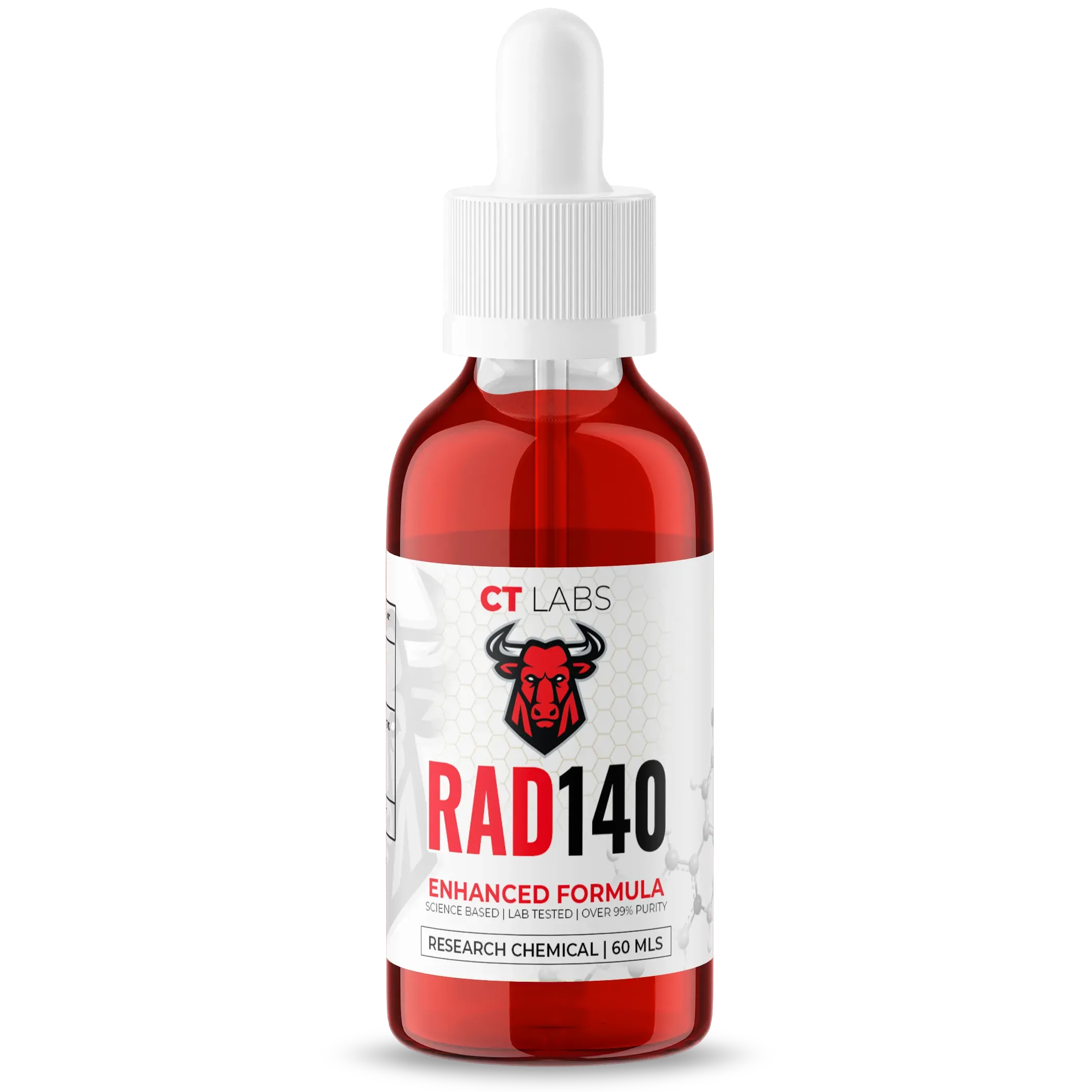
RAD‑140 (Testolone) is a selective androgen receptor modulator (SARM) used in preclinical research for its anabolic and neuroprotective signals. Below we present a concise summary of its chemical identity, mechanism of action, primary research uses, and the safety parameters investigators should monitor. The aim is to preserve technical accuracy while highlighting the findings most relevant to studies of muscle wasting, performance, and neuroprotection.
What is RAD‑140? Chemical identity & research classification
RAD‑140 is a synthetic SARM designed to bind androgen receptors with preferential activity in muscle and bone. That tissue selectivity is central to its design: produce anabolic effects comparable to classical agents while reducing androgenic activation in non‑target tissues. Structurally, RAD‑140 supports strong receptor engagement that underlies its anabolic activity in preclinical models.
How is RAD‑140 classified as a Selective Androgen Receptor Modulator?
As a SARM, RAD‑140 selectively engages androgen receptors in muscle and bone rather than acting uniformly across all androgen‑responsive tissues. This focused receptor activity drives anabolic signaling where desired and lowers the risk of systemic androgenic side effects. Compared with many SARMs, RAD‑140 exhibits relatively high AR binding affinity, which contributes to its potency in experimental settings.
Current literature positions SARMs as a class engineered to achieve tissue‑selective anabolic outcomes — stimulating muscle and bone while limiting off‑target androgen exposure.
SARMs: Muscle Growth & AR Agonism
A newer generation of performance‑modulating agents — selective androgen receptor modulators — was developed to increase tissue selectivity (i.e., anabolic effects in muscle and bone with minimal activity elsewhere). Both anabolic steroids and SARMs drive muscle growth primarily through androgen receptor (AR) agonism in target tissues.
The mechanisms of anabolic steroids, selective androgen receptor modulators and myostatin inhibitors — J. Rosenberg, 2022
What are the chemical properties and purity standards of RAD‑140?
The molecular formula for RAD‑140 is C20H16ClN5O2. For research use, suppliers typically characterize material at ≥98% purity. Analytical confirmation by validated methods such as high‑performance liquid chromatography (HPLC) is recommended before study use, since impurities can alter pharmacology and toxicology readouts.
How does RAD‑140 work? Mechanism of action in research
RAD‑140 acts by selectively binding androgen receptors and activating downstream signaling pathways that support muscle anabolism. By mimicking certain testosterone actions in target tissues, it promotes muscle protein synthesis and can increase lean mass in preclinical models.
What is the selective binding process of RAD‑140 to androgen receptors?

RAD‑140’s receptor engagement favors pathways that produce anabolic responses in muscle. This tissue‑targeted modulation helps limit activation in organs where androgenic effects are undesirable, which is why RAD‑140 is frequently used as a model compound for muscle preservation and growth studies.
How does RAD‑140 stimulate muscle protein synthesis and anabolic effects?
Preclinical evidence shows RAD‑140 enhances cell growth and protein synthesis pathways — including mTOR signaling — leading to muscle hypertrophy and improved recovery after exercise in animal models. These outcomes support further translational research into conditions marked by muscle wasting.
Key research applications and benefits of RAD‑140
RAD‑140 is most often investigated for muscle‑preserving and neuroprotective indications. Its pharmacology makes it a useful probe to study anabolic mechanisms and to explore candidate therapies for degenerative conditions.
How does RAD‑140 support muscle growth and combat muscle wasting?
In preclinical studies, RAD‑140 has been shown to increase net protein synthesis and reduce proteolysis, resulting in gains in lean mass and functional performance metrics. These properties make it a promising compound for translational work on cachexia, sarcopenia, and other catabolic states.
What neuroprotective effects of Testolone have been observed in studies?

Beyond anabolic endpoints, RAD‑140 has demonstrated preliminary neuroprotective activity in animal models — reducing neuronal damage and supporting markers of neurogenesis in some studies. These signals warrant additional research in neurodegenerative disease models, although human data remain limited.
Subsequent work reinforces these initial findings and highlights RAD‑140’s potential role in protecting neuronal function.
RAD-140: Neuroprotective Properties & Cancer Research
RAD‑140 has been reported to exhibit neuroprotective effects, protecting neurons in various neurodegenerative rat models [78].
Reported adverse effects of SARMs in animals and humans: A review., 2024
Safety profile and potential side effects in research
Thorough assessment of RAD‑140’s safety profile is essential. While preclinical studies suggest a potentially lower side‑effect burden than classic anabolic steroids, investigators should routinely monitor laboratory and endocrine measures during studies.
What are the documented side effects and toxicity considerations in RAD‑140 studies?
Reported adverse findings include transient elevations in liver enzymes and suppression of endogenous testosterone production. Long‑term safety and high‑dose toxicity are not fully characterized, so conservative dose selection and regular monitoring are advised.
Case reports have also described instances of hepatotoxicity associated with RAD‑140 exposure.
RAD-140 Anabolic Effects & Liver Injury Risk
RAD‑140, a novel selective androgen receptor modulator, produces potent anabolic effects in bone and muscle with limited androgenic activity. Although not approved for clinical use, it is available on the consumer market. Hepatotoxicity linked to SARM use has been reported rarely in the literature. One case described a 24‑year‑old male who developed cholestatic liver injury after using RAD‑140 for five weeks, with a peak total bilirubin of 38.5 mg/dL.
RAD‑140 drug-induced liver injury, 2022
How should researchers approach dosage and administration for safety?
Given limited human pharmacokinetic and safety data, begin exploratory studies at lower doses and escalate only with careful monitoring. Record clinical chemistry, hormonal panels, and any adverse events to build a robust safety dataset for future work.
How RAD‑140 compares to other SARMs and to testosterone in research
RAD‑140 differs from other SARMs and from testosterone primarily in receptor affinity, tissue selectivity, and relative potency at given doses.
What distinguishes RAD‑140 from other SARMs in potency and selectivity?
RAD‑140 is often cited as one of the more potent SARMs, with relatively high AR binding affinity. That potency can produce measurable anabolic effects at lower doses than some alternatives, which is advantageous for experimental designs that aim to limit off‑target activity.
Can RAD‑140 replace testosterone in research models?
RAD‑140 can reproduce several anabolic effects of testosterone in preclinical systems, but it is not a substitute for clinical testosterone therapy. In research, it serves best as a selective probe to study anabolic pathways or as a candidate therapeutic in models where reduced androgenic side effects are desirable.
Where to source high‑quality RAD‑140 for research
When procuring RAD‑140 for laboratory studies, prioritize vendors that provide clear quality documentation. Verified certificates of analysis and third‑party testing are essential to ensure consistent, interpretable results.
Why verify purity and third‑party testing?
Independent analytical verification lowers the risk of contaminated or mislabeled material, which can compromise experiments. HPLC and other validated assays should confirm identity and ≥98% purity for RAD‑140 used in studies.
| Compound | Purity Level | Testing Method | Availability |
|---|---|---|---|
| RAD‑140 | ≥98% | HPLC | Varies |
| Other SARMs | 95–99% | HPLC | Varies |
| Testolone | ≥98% | HPLC | Varies |
The table outlines typical purity expectations and common analytical approaches for RAD‑140 and related research compounds. Confirming these parameters helps protect study validity.
RAD‑140 remains a useful research compound for investigating anabolic biology and probing neuroprotective strategies. Carefully controlled studies will be necessary to define its therapeutic potential and long‑term safety.
Frequently Asked Questions
How does RAD-140 affect hormonal levels in the body?
RAD‑140 has been associated with suppression of endogenous testosterone production in some studies. Monitoring hormonal panels during research is important to quantify endocrine effects and manage any resulting imbalances.
What are the ethical considerations when conducting research with RAD-140?
Ethical research with RAD‑140 requires institutional approvals, informed consent where applicable, and strict adherence to welfare and safety protocols. Researchers should also comply with local regulations governing research chemicals and report results transparently.
Can RAD-140 be used in combination with other performance-enhancing substances?
Data on combinations of RAD‑140 with other performance‑enhancing compounds are limited. Combining agents may increase adverse effects or produce unpredictable interactions. Exercise caution and design combination studies with rigorous safety monitoring.
What are the best practices for handling and disposing of RAD-140 in research?
Handle RAD‑140 under established laboratory safety protocols: use appropriate PPE, work in ventilated spaces, and follow institutional chemical hygiene plans. Dispose of unused or expired compound per local hazardous waste regulations to prevent environmental contamination.
What are the implications of RAD-140’s legal status for researchers?
Legal status varies by jurisdiction. In many regions, RAD‑140 is classified as a research chemical and is not approved for human consumption. Researchers must confirm local regulations for procurement, use, and disposal to remain compliant.
What therapeutic applications might RAD‑140 have beyond muscle growth?
In addition to muscle preservation, RAD‑140’s early neuroprotective signals suggest potential utility in neurodegenerative disease models. Evidence is preliminary; further mechanistic and translational studies are needed before clinical claims can be made.
How does RAD‑140 compare with traditional anabolic steroids in side‑effect risk?
RAD‑140 was developed to reduce systemic androgenic effects by targeting receptors in muscle and bone. Preclinical safety profiles reflect this intent, but investigators should still monitor for endocrine suppression and hepatic markers in experimental work.
What is the current status of RAD‑140 in clinical research?
Most work to date is preclinical, with limited human clinical trials. RAD‑140 remains primarily a research chemical. The literature supports continued investigation but highlights the need for rigorous human safety and efficacy data.
Note that SARMs like RAD‑140 are not approved by major regulatory agencies for therapeutic use, and their long‑term effects require further study.
SARM Mechanism, Muscle Growth, & FDA Warnings
Selective androgen receptor modulators (SARMs) have demonstrated agonist activity at the androgen receptor across tissues, stimulating muscle growth and supporting bone reconstruction. Although several SARMs have entered clinical trials, none has FDA or EMA approval for pharmacotherapy. SARMs remain popular as performance‑enhancing agents, and regulatory bodies have issued warnings about associated health risks; long‑term exposure outcomes are still not fully understood.
Selective androgen receptor modulator use and related adverse events including drug-induced liver injury: analysis of suspected cases, N Leciejewska, 2024
Are there legal restrictions around using RAD‑140 for research?
Legal status differs by jurisdiction. In many locations RAD‑140 is not approved for human use and is treated as a research chemical. Ensure your procurement, usage, and disposal plans comply with local laws and institutional policies.
What storage practices maintain RAD‑140 stability?
Store RAD‑140 in a cool, dry place away from light and moisture. Recommended conditions are roughly 15°C–25°C (59°F–77°F). Proper storage preserves compound integrity for experimental use.
How can researchers ensure RAD‑140 is used ethically in studies?
Ethical use requires following institutional and regulatory protocols: obtain approvals, ensure transparent reporting, secure informed consent where applicable, and prioritize participant and animal welfare throughout the study.
Conclusion
RAD‑140 offers clear research value as a tissue‑selective anabolic agent with emerging neuroprotective signals. Its selective profile may reduce certain androgenic risks compared with traditional steroids, but responsible sourcing, conservative dosing, and systematic safety monitoring remain essential. For researchers, rigorous materials documentation and sound study design are critical to translating these preclinical findings.
SERPs table:
| Pos | Title | URL |
|---|---|---|
| 1. | pubmed.ncbi.nlm.nih.gov | https://pubmed.ncbi.nlm.nih.gov/37758180/ |
| 2. | www.sportintegrity.gov.au | https://www.sportintegrity.gov.au/news/integrity-blog/2021-05/rad-140-health-warning |
| 3. | Just a moment… | https://onlinelibrary.wiley.com/doi/10.1111/1440-1681.13824 |
| 4. | pmc.ncbi.nlm.nih.gov | https://pmc.ncbi.nlm.nih.gov/articles/PMC3959610/ |
| 5. | Myopericarditis Following Use of Selective Androgen Receptor Modifier “RAD-140” | JACC: Case Reports | https://www.jacc.org/doi/10.1016/j.jaccas.2024.102423 |
| 6. | Testolone: Overview, Uses, Side Effects, Precautions, Interactions, Dosing and Reviews | https://www.webmd.com/vitamins/ai/ingredientmono-1651/testolone |
| 7. | Abstract P5-11-01 : Phase 1 dose escalation study of a novel selective androgen receptor modulator (SARM), RAD140, in estrogen receptor positive (ER+), human epidermal growth factor receptor 2 negative (HER2-), metastatic breast cancer | Cancer Research | American Association for Cancer Research | https://aacrjournals.org/cancerres/article/80/4_Supplement/P5-11-01/647343/Abstract-P5-11-01-Phase-1-dose-escalation-study-of |
| 8. | What are the adverse effects of Testolone? – Consensus | https://consensus.app/search/what-are-the-adverse-effects-of-testolone/IKlD0aMGSjeqGRXGI5AGqw/ |
| 9. | Recreational Use of Selective Androgen Receptor Modulators | https://www.uspharmacist.com/article/recreational-use-of-selective-androgen-receptor-modulators |
| 10. | Has Testolone been studied for its effects on muscle wasting diseases like sarcopenia? – Consensus | https://consensus.app/search/has-testolone-been-studied-for-its-effects-on-musc/FpxFAoC7RPitW07PqWmTiQ/ |